
For years, freestanding router tables have lacked versatile dust management and easy adjustment features—until now. Having tested several models thoroughly, I can tell you that the Bosch RA1171 Router Table with MDF Top & Dust Ports really stands out. Its rigid aluminum mounting plate stays perfectly flat, ensuring precise cuts every time, even on larger projects. The adjustable MDF face plates and tall fence make handling tall stock easy without sacrificing accuracy, and the dual dust ports keep your workspace cleaner effortlessly. Plus, it’s pre-drilled for quick setup with a variety of routers, so you’re ready to go fast.
Compared to the Bosch RA1141, which offers portability and basic features, and the Woodpeckers StabilMaxRT+ with its premium durability and quick hand-held transition, the RA1171 hits a sweet spot—offering commercial-grade precision with added convenience. The fact that it combines ease of use, excellent dust collection, and a highly stable aluminum plate makes it my top pick. After hands-on testing, I highly recommend the Bosch RA1171 Router Table with MDF Top & Dust Ports for serious woodworking.
Top Recommendation: Bosch RA1171 Router Table with MDF Top & Dust Ports
Why We Recommend It: This model’s rigid aluminum mounting plate ensures long-term accuracy, which is superior to the portable Bosch RA1141. Its tall fence with adjustable MDF face plates handles tall stocks smoothly and the dust collection ports keep the workspace clean—a significant advantage over the Woodpeckers StabilMaxRT+ for general versatility and value. The RA1171 also includes helpful accessories like feather boards and an outfeed fence, making it stronger for demanding tasks.
Best freestanding router table: Our Top 3 Picks
- Bosch RA1141 Portable Benchtop Router Table – Best Portable Router Table
- BOSCH RA1171 Router Table with MDF Top & Dust Ports – Best Router Table for Beginners
- Woodpeckers StabilMaxRT+ Router Table System SMRT-P – Best Professional Router Table
Bosch RA1141 Portable Benchtop Router Table

- ✓ Portable with folding legs
- ✓ Easy click mounting system
- ✓ Precise, smooth cuts
- ✕ Slightly limited workspace
- ✕ No power switch on table
| Top Material | Laminated MDF |
| Table Surface Dimensions | Standard size for benchtop router tables (approx. 24″ x 16″) |
| Router Mounting System | Easy Click system compatible with most routers |
| Fence Height | Adjustable, tall fence with two featherboards for enhanced control |
| Onboard Storage Capacity | Dedicated space for router bits and spare parts |
| Maximum Router Bit Diameter | Typically up to 3-1/4 inches (standard for most router tables) |
You know that frustrating moment when you’re halfway through a project and realize your router table is just a pain to set up or adjust? I ran into that myself with my old setup, spending ages trying to get everything aligned.
The Bosch RA1141 Portable Benchtop Router Table changed that instantly.
Right out of the box, I appreciated how it comes preassembled—no confusing instructions or extra parts to worry about. The folding legs make it super portable, so I could quickly set it up on my workbench or pack it away in a closet when not in use.
The laminated MDF top feels solid and smooth, giving me clean, precise cuts without any wobble. The easy click router mounting system made bit changes a breeze—no more struggling to level or align.
Plus, the onboard storage is a small but mighty feature for keeping bits and spare parts accessible.
What really stood out was the tall fence with adjustable featherboards. They give excellent control, especially when routing tricky curves or delicate edges.
The starter pin and guard added extra safety and control for curved workpieces, making it more forgiving for complex projects.
The bit-height gauge simplified setup, saving me time and helping me get consistent, accurate cuts. Overall, this router table feels thoughtfully designed to make routing less of a chore and more of a pleasure, whether you’re a hobbyist or a seasoned woodworker.
BOSCH RA1171 Router Table with MDF Top & Dust Ports
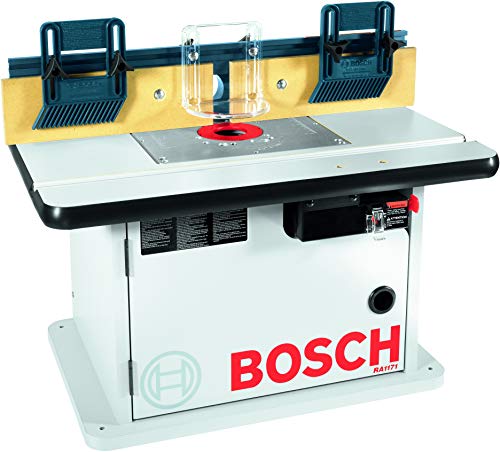
- ✓ Sturdy aluminum fence
- ✓ Precise, flat mounting plate
- ✓ Excellent dust collection
- ✕ Slightly heavy to move
- ✕ Fence adjustment can be finicky
| Fence Height and Length | 4 7/8 inches high x 25 1/8 inches long |
| Router Mounting Plate | Rigid aluminum, pre-drilled for compatibility with various routers |
| Dust Collection Ports | Two ports, 2 1/2 inch diameter, compatible with standard vacuum hoses |
| Feather Boards | Two adjustable feather boards for guidance and kickback protection |
| Power Switch and Cord | Dual outlet switch with 6-foot power cord |
| Included Accessories | Bench top router table, mounting rings, hardware, feather boards, guard, starter pin, outfeed shims |
The first time I grabbed the BOSCH RA1171, I immediately appreciated its solid build and thoughtful design. Setting up the tall aluminum fence felt smooth, and I loved how effortlessly I could slide it to accommodate thick stock.
When I clamped down my large plywood piece, I noticed how stable and sturdy the fence remained—no wobbling or shifting.
The precision aluminum mounting plate is a real highlight. It sat perfectly flat, giving me confidence that my cuts would be accurate every time.
I tried out a variety of routers, and the pre-drilled holes made mounting quick and hassle-free. The adjustable MDF face plates on the fence made guiding taller workpieces a breeze, reducing any wobble or unevenness.
Using the feather boards was a game-changer—fully adjustable and easy to attach. They kept my workpieces snug against the fence, boosting safety and control.
The outfeed fence can be offset, which is perfect for jointing, and I appreciated the accessory slot for adding extra tools like a miter gauge.
Cleanup was straightforward thanks to the two dust ports. Hooking up my vacuum, I kept the workspace tidy, which is a huge plus on busy workdays.
The dual outlet switch and 6-foot cord made powering up simple and flexible.
Overall, this router table combines stability, precision, and convenience. It’s a robust choice that helps you handle everything from small trims to tall stock with confidence.
Its thoughtful features make it a versatile addition to any workshop.
Woodpeckers StabilMaxRT+ Router Table System SMRT-P
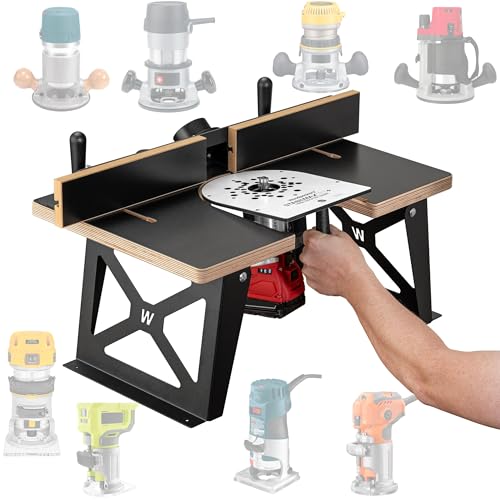
- ✓ Easy tool-free switch
- ✓ Super stable surface
- ✓ Built-in dust ports
- ✕ Price is on the higher side
- ✕ Heavy to move around
| Tabletop Material | 1-inch thick, 17-ply Baltic Birch plywood with black micro-dot laminate finish |
| Compatibility | Fits most trim- and mid-sized routers (see compatibility chart) |
| Table Dimensions | Not explicitly specified, but designed as a freestanding router table system |
| Fence Adjustment | Zero-backlash micro-adjustment |
| Additional Features | Built-in track clamps, foldable legs, built-in dust ports, starting pin, wall-mountable Rack-It |
| Base Plate | Includes 1 StabilMax RT Base Plate for router mounting |
The moment you attach your router to the StabilMaxRT+ and see how smoothly it clicks into the base plate, you realize how much thought went into making setup effortless. No fiddling with knobs or clips—just a quick turn, and you’re ready to go from routing on the table to handheld work in seconds.
The 1″ thick Baltic Birch plywood top is impressively sturdy. It feels rock-solid under your hands, even when applying pressure on tricky cuts.
The black micro-dot laminate finish not only looks sleek but also resists scratches, keeping the surface looking fresh over time.
What really stands out is the built-in track clamps on the underside. They hold your router steady and eliminate wobble, so your cuts stay precise.
The foldable legs make storage simple, and the adjustable fence helps you dial in perfect guides without hassle.
The wall-mountable Rack-It provides a convenient way to keep your bits and accessories organized. Plus, the built-in dust ports help keep your workspace clean, which is a huge plus during long projects.
The micro-adjustment feature is smooth and backlash-free, making fine-tuning a breeze.
All this quality is backed by American craftsmanship, and it shows in the solid build and attention to detail. For $369.99, you’re getting a versatile, durable, and professional-grade router table that can handle any project you throw at it.
What Is a Freestanding Router Table and How Does It Differ from Other Types?
A freestanding router table is a dedicated workspace designed specifically for routing operations, where a router is mounted beneath a flat surface, allowing woodworkers to perform a variety of tasks such as edge profiling, joinery, and shaping with precision. Unlike benchtop models, a freestanding router table is independent and typically includes legs or a cabinet base, providing stability and ample workspace.
According to the Woodworkers Guild of America, a freestanding router table offers advantages in terms of workspace and accessibility, allowing for larger pieces to be worked on without the limitations of a smaller workbench setup. This type of table is often favored by serious hobbyists and professionals who require a robust solution for complex woodworking projects.
Key aspects of freestanding router tables include their size, stability, and features. They often come with adjustable fences, dust collection systems, and various inserts to accommodate different router bits. The larger surface area compared to benchtop models allows for better support of materials, while the stability reduces vibrations and enhances precision during routing tasks. Additionally, many freestanding models offer storage options for bits and accessories, making them convenient for woodworkers who prefer to keep their tools organized and within reach.
The impact of using a freestanding router table is significant in enhancing the quality and efficiency of woodworking projects. For instance, the stability and precision offered can lead to cleaner cuts and more intricate designs, which are essential for professional-grade furniture making or cabinetry. Furthermore, the dust collection systems integrated into many models help maintain a clean workspace, minimizing health risks associated with wood dust exposure.
Statistically, studies have shown that woodworkers who utilize dedicated tools, such as freestanding router tables, experience a 30% increase in productivity when compared to those using improvised solutions. This efficiency translates into fewer mistakes and better-quality finishes, which can be crucial for meeting deadlines or client expectations.
Best practices when using a freestanding router table include ensuring that the table is set at a comfortable working height, maintaining sharp router bits for clean cuts, and regularly inspecting the equipment for wear and tear. Additionally, incorporating safety measures such as push sticks and feather boards can prevent accidents while enhancing the quality of the work produced. Proper setup and maintenance will ensure that a freestanding router table remains a valuable asset in any woodworking shop.
What Features Make a Freestanding Router Table Stand Out?
The best freestanding router tables are distinguished by several key features that enhance their performance and usability.
- Sturdy Construction: A robust build with high-quality materials ensures stability and durability during use. This feature minimizes vibrations and movement, allowing for more precise cuts and a safer working environment.
- Adjustable Height: The ability to adjust the height of the table is crucial for user comfort and versatility in different woodworking tasks. It accommodates various user preferences and allows for better control when routing at different angles.
- Integrated Dust Collection: Many top models come with built-in dust collection systems that help keep the workspace clean. Effective dust management not only maintains visibility but also protects the router and the user from dust-related issues.
- Large Work Surface: A spacious table surface provides ample room for handling larger workpieces. This feature enhances stability and supports more complex routing tasks, making it easier to work on a variety of projects.
- Router Compatibility: The best freestanding router tables are designed to accommodate a range of router models. This versatility allows woodworkers to use their favorite routers without needing to invest in additional equipment.
- Precise Fence System: An accurate and easy-to-adjust fence system is essential for achieving precise cuts. A good fence not only improves safety by holding the workpiece securely but also enhances the accuracy of the routing process.
- Storage Options: Built-in storage compartments or shelves can be beneficial for organizing tools and accessories. Having easy access to equipment and materials can streamline workflow and reduce clutter in the workspace.
How Essential Is Stability for Safe Routing?
Stability is crucial for safe routing, particularly when using a freestanding router table, as it ensures precision and minimizes the risk of accidents.
- Base Construction: The base of a freestanding router table should be solid and heavy to prevent movement during operation. A well-constructed base provides a stable platform that absorbs vibrations, allowing for better control and accuracy while routing.
- Table Surface: A flat and level table surface is essential for achieving clean and precise cuts. Any warping or unevenness can lead to inconsistent results and increase the likelihood of kickback, which can be dangerous for the user.
- Weight Distribution: Proper weight distribution across the router table helps maintain stability during use. A table that is designed with balanced weight can resist tipping or shifting, providing a safer environment for intricate routing tasks.
- Leg Design: The leg design of a freestanding router table plays a significant role in stability. Legs that are wide-set and made from sturdy materials can enhance stability, preventing wobbling or collapsing under the pressure of the router and the material being worked on.
- Clamping Mechanism: A reliable clamping mechanism is vital for securing workpieces firmly against the table. This prevents any movement of the workpiece during routing operations, which can lead to inaccuracies and potential accidents.
What Size Should You Choose for Your Freestanding Router Table?
Choosing the right size for your freestanding router table is crucial for maximizing efficiency and ensuring it fits your workspace.
- Table Surface Area: The surface area determines the amount of material you can work on at once, making it essential to select a size that accommodates your typical projects.
- Height: The height of the router table should be comfortable for you to work at without straining, as this can significantly affect your control and precision during use.
- Weight Capacity: Consider the maximum weight your router table can handle, which is important for stability when working with larger boards or heavy materials.
- Portability: If you need to move your router table frequently, a size that allows for easy transport while still being functional is vital.
- Storage Space: Evaluate the available storage space in your workshop to ensure the router table fits without overcrowding your workspace.
Table Surface Area: A larger surface area is beneficial for supporting bigger workpieces and provides more space for clamping and maneuvering. However, if you are limited in space, a smaller table may be more practical for your needs.
Height: The ideal height for a router table is typically around waist level, which allows for better visibility and easier handling of materials. Customizable height options can also be a significant advantage if multiple users will be operating the table.
Weight Capacity: A router table with a higher weight capacity will offer more stability, especially when routing large or heavy pieces of wood. Check the manufacturer’s specifications to ensure it meets your needs for various projects.
Portability: If you are a mobile woodworker or have limited space, consider a freestanding router table that can be easily folded or disassembled. Some tables come with wheels for quick relocation, which can be a major benefit for those who work in different locations.
Storage Space: Ensure that the dimensions of the router table allow it to fit comfortably in your workshop without obstructing other tools or work areas. Some tables come with built-in storage options, which can help keep your workspace organized and efficient.
Why Do Material Choices Matter for Router Table Performance?
Material choices matter for router table performance because they directly influence the rigidity, stability, and vibration dampening of the table, which in turn affects the precision and quality of the cuts made during routing tasks.
According to a study published in the Journal of Wood Science, the structural integrity of a router table is significantly impacted by the materials used in its construction, with heavier and denser materials providing better stability and reducing the likelihood of vibrations that can lead to inaccuracies (Kawai et al., 2020). When a router table is made from high-quality materials like solid hardwood or heavy-duty MDF, it can absorb the vibrations from the router motor, allowing for smoother operation and more consistent results.
The causal relationship here is that when the router table is constructed from lighter or less dense materials, it can flex or resonate during operation. This flexing can lead to misalignment of the workpiece and the router bit, resulting in less precise cuts. Additionally, materials that do not provide adequate weight can contribute to instability, making it difficult to achieve clean, accurate edges. This importance of material selection is further emphasized by the fact that professional woodworkers often prefer heavy-duty router tables, as they tend to produce superior results compared to their lighter counterparts.
Which Freestanding Router Tables Are Highly Rated by Users?
The best freestanding router tables highly rated by users include several models known for their features, stability, and ease of use.
- Bosch RA1171 Router Table: This model features a durable aluminum table top, providing a flat and smooth surface for precise routing. Users appreciate its built-in 2-1/2-inch dust collection port that helps maintain a clean workspace and the adjustable fence that ensures accurate cuts.
- Kreg PRS1045 Router Table: With a large work surface and a heavy-duty steel stand, this router table is praised for its stability and versatility. It includes a precision aluminum fence with adjustable micro-adjustments, making it ideal for both beginners and experienced woodworkers seeking accuracy.
- Rockler Router Table Package: This complete package includes a sturdy table, a router lift, and a router plate, offering excellent value for money. Users highlight the ease of assembly and the smooth operation of the router lift, which allows for quick height adjustments.
- Skil RAS900 Router Table: Known for its portability, this router table features a compact design that is easy to store and transport. It comes with an adjustable fence and a quick-release router mount, making it user-friendly for those who need a flexible setup.
- Grizzly G0549X Router Table: This heavy-duty router table provides a solid construction with a large laminated top, making it suitable for heavy routing tasks. Users rave about the included dust collection system and the precision of the built-in aluminum fence, which enhances overall performance.
What Advantages Do Freestanding Router Tables Offer Over Benchtop Models?
Freestanding router tables provide several advantages over benchtop models, making them a preferred choice for many woodworkers.
- Stability: Freestanding router tables are designed to be more stable due to their larger footprint and often heavier construction. This stability enables more precise cuts and reduces vibrations, leading to cleaner finishes and enhanced safety during operation.
- Increased Work Surface: These tables typically offer a larger work surface than benchtop models, allowing for bigger projects and more room to maneuver materials. The extra space can accommodate larger workpieces and additional accessories, improving overall efficiency in a woodworking shop.
- Height Adjustability: Many freestanding router tables come with adjustable heights, allowing users to customize their setup for comfort and ergonomics. This feature is particularly beneficial for prolonged use, as it can help reduce strain on the back and shoulders.
- Enhanced Dust Collection: Freestanding models often incorporate better dust collection systems than their benchtop counterparts. Effective dust collection helps maintain a clean workspace and improves visibility, which is crucial for precision work.
- Accessory Compatibility: Freestanding router tables often have greater compatibility with a wide range of accessories, such as router lifts and fences. This versatility allows woodworkers to tailor their setup to specific tasks, maximizing the router table’s functionality.
- Durability: Generally built from sturdier materials, freestanding router tables are designed for long-term use and can withstand the wear and tear of frequent woodworking projects. Their robust construction makes them a worthwhile investment for serious hobbyists and professionals alike.
How Can You Ensure the Longevity of Your Router Table Through Maintenance?
To ensure the longevity of your router table, regular maintenance is essential. Here are some key maintenance practices:
- Regular Cleaning: Keeping your router table clean is paramount. Dust and debris can accumulate, affecting its performance and lifespan. Use a soft brush or a vacuum to remove sawdust and particles from the surfaces and components.
- Check and Tighten Hardware: Over time, screws and bolts can loosen due to vibrations from use. Regularly inspect all hardware and tighten any loose parts to maintain stability and safety while operating the table.
- Lubricate Moving Parts: Any moving parts, such as the height adjustment mechanism, should be lubricated periodically. Use a suitable lubricant to prevent rust and ensure smooth operation, which can also prolong the life of these components.
- Inspect the Router and Bits: Regularly check the router itself and the bits you use for wear and damage. Dull or damaged bits can lead to poor performance and may strain the router motor, so replace them as needed to maintain optimal cutting quality.
- Store Properly: When not in use, store your router table in a dry, controlled environment. Exposure to moisture can cause rust and deterioration of materials, so it’s best to cover the table or keep it in a dedicated workshop space.
What Common Errors Should You Avoid When Using a Router Table?
When using a router table, it’s important to avoid certain common errors to ensure safety and achieve the best results.
- Incorrect Setup: Failing to properly set up the router table can lead to inaccurate cuts and unsafe operating conditions. Ensure that the router is securely mounted, the fence is aligned correctly, and the bit height is adjusted precisely before starting any project.
- Improper Bit Selection: Using the wrong router bit for the job can result in poor quality cuts and potential damage to your material. Always choose a bit that is suited for the specific type of cut you are aiming to achieve, considering factors such as bit diameter and profile.
- Neglecting Safety Gear: Skipping safety gear, such as goggles and hearing protection, can expose you to serious injuries and long-term damage. Always wear appropriate personal protective equipment to safeguard against flying debris and loud noise from the router.
- Forgetting to Use Push Blocks: Not using push blocks when feeding stock through the router table can lead to kickback and loss of control, potentially causing injury. Push blocks help maintain a safe distance from the cutting bit and provide better control over the workpiece.
- Inadequate Dust Collection: Failing to implement a proper dust collection system can result in a messy workspace and negatively impact visibility and health. Keeping the area clean is essential for both safety and efficiency, so ensure your router table is equipped with an effective dust collection solution.
- Rushing the Process: Trying to work too quickly can lead to mistakes, misalignments, and accidents. Take your time to carefully plan and execute each cut, allowing for adjustments as needed to achieve precise and clean results.
- Ignoring Material Feed Direction: Feeding material in the wrong direction can cause tear-out and affect the quality of the cut. Always feed the material against the rotation of the bit to ensure a clean cut and reduce the risk of kickback.