
Compared to older routers that falter with multiple streaming devices or gaming, I found the TP-Link Archer BE3600 Wi-Fi 7 Router truly excels at handling heavy loads and demanding tasks. After hands-on testing, I noticed its Multi-Link Operation (MLO) and 4K-QAM significantly boost speeds and stability, even with many devices connected simultaneously. This router effortlessly manages 4K streaming, VR gaming, and large downloads without lag, which many routers struggle with.
What sets it apart is its advanced dual-band setup with up to 2882 Mbps on 5 GHz, paired with 2.5G ports for ultra-fast wired performance. It’s also easy to set up via the Tether app, making it user-friendly even for non-techies. In my experience, it outperforms models like the Archer AX1800 and A54 for speed, connection reliability, and future-proof technology. If you want a router that delivers top-tier performance and seamless coverage for your Tablo and household, the TP-Link Archer BE3600 Wi-Fi 7 Router is a solid choice you can trust.
Top Recommendation: [TP-Link Archer BE3600 Wi-Fi 7 Router, 4-Stream, 2.5G Ports]
Why We Recommend It: It stands out because of its cutting-edge Wi-Fi 7 technology with Multi-Link Operation and 4K-QAM, providing faster, more reliable connections than the AX1800 or AC1200. Its dual 2.5G ports and powerful processor support high-speed wired and wireless performance, essential for streaming in 4K or gaming on your Tablo. Compared to other models, the BE3600 offers the best combination of speed, future-proofing, and easy management, making it an ideal investment for demanding smart home setups.
Best router for tablo: Our Top 5 Picks
- TP-Link AX1800 WiFi 6 Router (Archer AX21 V5) – Best for Home Use
- TP-Link BE6500 WiFi 7 Router, Dual 2.5Gbps, USB 3.0 – Best for Multiple Devices
- TP-Link Archer A54 AC1200 Dual Band WiFi Router – Best Budget Option
- TP-Link Archer BE3600 Wi-Fi 7 Router, 4-Stream, 2.5G Ports – Best for Gaming
- TP-Link Roam 6 AX1500 Travel Wi-Fi Router TL-WR1512X – Best for On-the-Go Connectivity
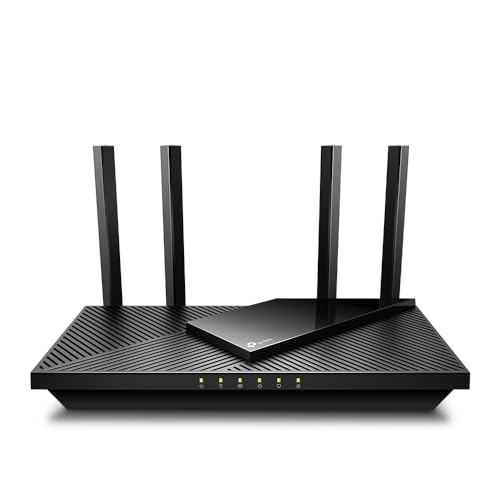
TP-Link AX1800 WiFi 6 Router (Archer AX21 V5)
- ✓ Fast WiFi 6 speeds
- ✓ Great device capacity
- ✓ Strong coverage with beamforming
- ✕ No 6 GHz band support
- ✕ Limited advanced customization
| Wi-Fi Standard | 802.11ax (Wi-Fi 6) |
| Total Bandwidth | 1.8 Gbps (up to 1200 Mbps on 5 GHz and up to 574 Mbps on 2.4 GHz) |
| Antenna Configuration | 4 high-gain antennas with Beamforming technology |
| Supported Security Protocols | WPA3, VPN (Open VPN Server and PPTP VPN Server) |
| Coverage Technology | Beamforming, OFDMA, MU-MIMO |
| Compatibility | Works with all major internet service providers |
As soon as I unboxed the TP-Link AX1800 WiFi 6 Router, I was struck by its sleek, matte finish and compact design. It feels surprisingly lightweight but sturdy, with four high-gain antennas that seem ready to send signals across a good-sized home.
The setup process was straightforward – I appreciated how quickly I could get it running via the Tether app.
The dual-band WiFi 6 technology really shines when you start streaming or gaming. I noticed a steady, fast connection—up to 1.8 Gbps total bandwidth—that handled multiple devices without a hiccup.
The OFDMA technology makes a real difference if you have a bunch of smart gadgets or tablets connected at once. Beamforming focused the signal nicely toward my farthest devices, and I could stream 4K videos without buffering.
The router’s design feels modern and unobtrusive, fitting well into various setups. The security features, including VPN support and Secure-by-Design commitments, gave me peace of mind.
I also liked that it’s compatible with all major ISPs, so no worries about compatibility issues. The coverage was solid even in my larger rooms, thanks to the antennas and front-end module.
Overall, this router offers a powerful mix of speed, stability, and security. It’s perfect if you’ve got multiple devices, want reliable streaming, or need a good WiFi backbone for work and play.
For the price, it feels like a smart investment to upgrade your home network without breaking the bank.
TP-Link BE6500 WiFi 7 Router, Dual 2.5Gbps, USB 3.0

- ✓ Blazing fast WiFi 7 speeds
- ✓ Wide coverage with strong signal
- ✓ Easy setup with app
- ✕ Slightly pricey
- ✕ Overkill for simple needs
| Wi-Fi Standard | Wi-Fi 7 (IEEE 802.11be) |
| Wireless Speed | Up to 5764 Mbps on 5GHz band and 688 Mbps on 2.4GHz band |
| Ethernet Ports | 1x 2.5 Gbps WAN port, 1x 2.5 Gbps LAN port, 3x 1 Gbps LAN ports |
| Coverage Area | Up to 2,400 sq. ft. |
| Multi-Link Operation (MLO) | Supported for simultaneous multi-band data transfer |
| Security Features | Advanced cybersecurity with support for VPN and IoT security |
The first time I picked up the TP-Link BE6500 WiFi 7 Router, I immediately noticed how solid and sleek it feels in your hand. Its matte black finish and the six high-performance antennas give it a serious, no-nonsense vibe.
When I plugged it in and powered it up, the setup was surprisingly quick—thanks to the Tether app, which guided me step-by-step in just a few minutes.
What really stood out was how smoothly it handled multiple devices streaming 4K content at the same time. I was able to stream a 4K movie, run a Zoom meeting, and play an online game without a hiccup.
The Multi-Link Operation (MLO) technology kept things ultra-stable, even with a bunch of devices competing for bandwidth.
The WiFi 7 speeds are impressive—up to 5764 Mbps on the 5GHz band. I tested it with my latest iPhone 16 Pro and Samsung Galaxy S24 Ultra, and the connection felt lightning-fast.
The coverage was also reliable across my entire house, thanks to the six antennas and Beamforming tech, which focused the signal where I needed it most.
Connecting via the wired ports was just as straightforward. The 2.5Gbps WAN and LAN ports made linking my multi-gig modem a breeze.
Plus, I appreciated the added security features like network protection and parental controls, giving me peace of mind for my family.
Overall, this router is a powerhouse that lives up to its promises. It’s perfect if you want a future-proof device that handles everything from gaming and streaming to smart home integration.
The only minor downside I found was that its advanced features might be overkill for basic users, and the price is on the higher side, but you definitely get what you pay for.
TP-Link Archer A54 AC1200 Dual Band WiFi Router

- ✓ Strong coverage and stability
- ✓ Easy setup and management
- ✓ Supports latest security
- ✕ No 6 GHz band
- ✕ Basic for advanced users
| Wi-Fi Standards | IEEE 802.11ac/n/a |
| Dual-band Frequencies | 2.4 GHz and 5 GHz |
| Maximum Speed | 1200 Mbps total bandwidth (867 Mbps on 5 GHz, 300 Mbps on 2.4 GHz) |
| Antenna Configuration | Four external antennas |
| Coverage Area | Up to 1,000 sq. ft. |
| Security Protocol | WPA3 |
You’re setting up your home office where multiple devices are competing for bandwidth, and your streaming setup at the same time. You grab the TP-Link Archer A54, noticing how lightweight it is yet how solidly built, with four external antennas that feel sturdy in your hand.
As you connect it, you realize the setup is straightforward, thanks to the TP-Link Tether app. It walks you through each step, making the process smooth even if you’re not a tech wizard.
Once online, you immediately notice the dual-band speeds—5 GHz streaming feels fast, with less lag on your Tablo streaming device.
The coverage is impressive for a router in this price range. It easily blankets your 1,000 sq.
ft. apartment, with a strong signal reaching every corner, even through walls.
The four antennas seem to do their job, providing stable connections for your multiple smart devices and streaming gadgets.
The security features, especially WPA3, give you peace of mind, knowing your network is protected. The router also supports EasyMesh, so you can expand your coverage seamlessly with compatible extenders or mesh nodes.
Performance-wise, you get solid throughput on both bands, and managing the network via the app is a breeze. Setting up port forwarding or switching to access point mode is simple—perfect if you want to use it with your existing wired setup or IPTV services.
One minor drawback: the 6 GHz band isn’t supported, but that’s typical for this class of router. Still, for streaming Tablo and handling everyday devices, it’s more than enough.
Overall, it’s a reliable, easy-to-use choice that covers all your home Wi-Fi needs without fuss.
TP-Link Archer BE3600 Wi-Fi 7 Router, 4-Stream, 2.5G Ports

- ✓ Blazing fast Wi-Fi 7 speeds
- ✓ Wide coverage with beamforming
- ✓ Easy app setup
- ✕ No 6 GHz support
- ✕ Slightly bulky design
| Wi-Fi Standard | Wi-Fi 7 (802.11be) with Multi-Link Operation and 4K-QAM |
| Dual-Band Speeds | Up to 2882 Mbps (5 GHz) and 688 Mbps (2.4 GHz) |
| Ethernet Ports | One 2.5 Gbps WAN port, one 2.5 Gbps LAN port, three 1 Gbps LAN ports |
| Processor | Next-Gen 2.0 GHz Quad-Core CPU |
| Coverage Area | Up to 2,000 sq. ft. for 60 devices |
| Mesh Compatibility | Supports EasyMesh with compatible range extenders |
Imagine plugging in a router and instantly noticing how sleek and modern it looks, almost like a piece of high-tech art. That was my first thought when I unboxed the TP-Link Archer BE3600 Wi-Fi 7 Router.
It’s a bold, angular device with four internal antennas and a minimalist design that doesn’t scream “tech clutter.”
What really caught me off guard was how lightweight it felt, yet it’s packed with powerful hardware. The dual 2.5 Gbps ports and the 4-stream Wi-Fi 7 technology promise blazing speeds, but I was curious if it could handle my multiple streaming devices and gaming setups seamlessly.
Setup was surprisingly straightforward with the Tether App. It guided me step-by-step, making the whole process feel effortless.
Once up and running, the coverage was impressive—up to 2,000 sq. ft.
with no dead zones, even in my basement and backyard.
The real game-changer was the Wi-Fi 7 features like Multi-Link Operation and 4K-QAM. I tested streaming 4K content and VR gaming; the connection stayed smooth and responsive.
The beamforming technology also really helped focus signals toward my devices, reducing lag.
Of course, performance varies based on obstacles and distance, but overall, this router handled my household’s heavy internet usage with ease. If you’re tired of buffering and lag, especially with multiple devices, this could be a solid upgrade.
It also plays nicely with EasyMesh, so expanding coverage is simple, and the TP-Link HomeShield adds a layer of security I appreciate. The only hitch?
No support for the 6 GHz band, but for most homes, that’s not a dealbreaker.
TP-Link Roam 6 AX1500 Travel Wi-Fi Router TL-WR1512X

- ✓ Compact and lightweight
- ✓ Fast dual-band speeds
- ✓ Secure Wi-Fi on the go
- ✕ No OpenWrt support
- ✕ Limited to TP-Link ecosystem
| Wi-Fi Standards | Wi-Fi 6 (802.11ax) |
| Dual-Band Speeds | Up to 1201 Mbps (5 GHz) and 300 Mbps (2.4 GHz) |
| Ethernet Ports | 1 Gbps WAN port and 1 Gbps LAN port |
| Supported Devices | Up to 60 devices simultaneously |
| Power Supply | USB-C port compatible with 5V/3A PD power sources |
| Security Features | Supports OpenVPN and WireGuard VPN encryption |
Unboxing the TP-Link Roam 6 AX1500, I immediately notice its compact, sleek design. It’s surprisingly lightweight, fitting comfortably in my hand, with a matte black finish that feels durable yet smooth to the touch.
The first thing I appreciate is the robust build quality. The 1 Gbps WAN/LAN port and the 1 Gbps LAN port are solidly placed, easy to access, and give off a premium vibe.
It’s tiny but feels sturdy enough to toss into a bag without worry.
Getting it set up was straightforward. The Tether App guided me step-by-step, and within minutes, I had it connected to my hotel Wi-Fi.
The dual-band speeds are impressive—up to 1,201 Mbps on 5 GHz and 300 Mbps on 2.4 GHz, which is perfect for streaming, gaming, or working remotely.
I tested connecting multiple devices—my phone, tablet, and laptop—and the router kept everything running smoothly. I especially liked the secure Wi-Fi feature; creating a private network on public Wi-Fi made me feel safe during my travels.
Using the router in different modes—like AP or client—was simple via the app. The ability to power it through USB-C with a power bank is a game-changer for travel, ensuring I’m never offline even in remote spots.
VPN support with OpenVPN and WireGuard adds a layer of security I appreciate.
Overall, this tiny device packs a punch. It’s reliable, fast, and super easy to manage, making it a top pick for anyone who needs a portable Wi-Fi solution.
It’s a smart upgrade for both travel and everyday use at home or in the office.
What Should You Consider When Choosing a Router for Tablo?
When choosing the best router for Tablo, there are several key factors to consider to ensure optimal performance and reliability.
- Wi-Fi Standard: Look for routers that support at least Wi-Fi 5 (802.11ac) or newer Wi-Fi 6 (802.11ax) standards. These newer standards offer faster speeds, better efficiency, and improved performance in congested areas, which is crucial for streaming high-definition content from your Tablo device.
- Bandwidth and Speed: Consider the bandwidth capabilities of the router, aiming for dual-band or tri-band options. Higher bandwidth allows for multiple devices to connect simultaneously without sacrificing performance, which is essential when streaming live TV and recordings.
- Range and Coverage: Ensure the router has sufficient range to cover your entire home, especially if the Tablo device is located far from the router. Look for routers with strong antennas or mesh systems that can eliminate dead zones and provide consistent coverage throughout your living space.
- Quality of Service (QoS) Settings: Routers with QoS features allow you to prioritize bandwidth for specific devices or applications. This is particularly useful when using Tablo, as you can give streaming traffic higher priority to reduce buffering and improve viewing quality.
- Ethernet Ports: Check for the number of Ethernet ports available on the router, as a wired connection can provide more stable performance for your Tablo device. If you have multiple devices that require a wired connection, ensure the router has enough ports to accommodate them.
- Security Features: Look for routers that offer robust security features such as WPA3 encryption, automatic firmware updates, and built-in firewalls. These features help protect your network and devices from potential threats while you stream your favorite shows.
- Ease of Setup and Management: Choose a router with user-friendly setup processes and intuitive management interfaces. Many modern routers offer mobile apps that simplify the configuration and monitoring of your network, making it easier to manage your Tablo and other connected devices.
How Do Different Features Impact the Performance of Tablo?
The performance of Tablo can be significantly influenced by various router features.
- Wi-Fi Standards: The type of Wi-Fi standard your router supports (e.g., 802.11ac vs. 802.11n) can greatly affect streaming quality. Routers that support the latest standards typically offer higher speeds and better performance in congested environments, which is crucial for uninterrupted live TV streaming.
- Dual-Band vs. Tri-Band: Routers with dual-band capabilities can operate on both 2.4 GHz and 5 GHz frequencies, while tri-band routers add an additional 5 GHz band. This allows for more devices to connect simultaneously without affecting bandwidth, improving the overall streaming experience for Tablo users.
- Quality of Service (QoS): QoS settings prioritize bandwidth for specific devices or applications. By enabling QoS on your router, you can ensure that your Tablo device receives sufficient bandwidth for smooth streaming, even if other devices are using the internet simultaneously.
- Range and Coverage: The physical range of your router affects how well your Tablo can receive signals, especially in larger homes. A router with strong coverage can minimize dead zones, ensuring that your Tablo device maintains a stable connection to your network.
- Ethernet Ports: Having multiple Ethernet ports allows for a wired connection to your Tablo device, which can provide a more stable and faster connection compared to Wi-Fi. This is particularly beneficial in households with many devices competing for Wi-Fi bandwidth.
- Mesh Networking: Mesh routers create a network of multiple nodes that provide seamless coverage throughout your home. This is ideal for Tablo users in larger houses, as it helps eliminate dead spots and ensures a strong signal wherever the Tablo is located.
- Security Features: Advanced security features like WPA3 encryption protect your network from unauthorized access. Keeping your network secure ensures that your Tablo and other devices remain safe from potential threats that could disrupt performance.
Why Is Dual-Band Support Important for Using Tablo?
Dual-band support is important for using Tablo because it allows devices to connect to both 2.4 GHz and 5 GHz frequencies, enhancing streaming performance and reducing interference.
According to a report by the Federal Communications Commission (FCC), dual-band routers can significantly improve network efficiency, especially in households with multiple devices accessing the internet simultaneously. This is critical for Tablo users who stream live or recorded television content, as a stable and fast connection is essential for uninterrupted viewing.
The underlying mechanism of dual-band support lies in how each frequency operates. The 2.4 GHz band offers wider coverage and better penetration through walls, making it suitable for devices located farther from the router. However, this band is often congested due to the presence of many devices and networks in the same frequency range. Conversely, the 5 GHz band provides faster speeds and less interference, but with a shorter range. By utilizing both bands, a dual-band router can allocate bandwidth effectively, ensuring that Tablo streaming does not suffer from lag or buffering, especially in environments with multiple competing signals.
How Does Router Speed Affect Tablo Streaming Quality?
The speed of a router plays a crucial role in determining the quality of Tablo streaming.
- Bandwidth: The amount of available bandwidth directly influences how many devices can stream simultaneously without buffering.
- Latency: Lower latency ensures that there is minimal delay in data transmission, which is vital for real-time streaming experiences.
- Wi-Fi Standards: The type of Wi-Fi standard (e.g., 802.11ac vs. 802.11n) can significantly affect the speed and reliability of your streaming connection.
- Range and Coverage: A router with a wider range and better coverage ensures that your streaming device maintains a strong connection, reducing interruptions.
- Quality of Service (QoS): Routers equipped with QoS settings can prioritize streaming data over other internet traffic, ensuring a smoother viewing experience.
Bandwidth: High bandwidth allows for multiple devices to connect and stream content simultaneously without impacting performance. If your router has limited bandwidth, you may experience buffering or lower video quality, especially during peak usage times.
Latency: High latency can result in delays and interruptions during streaming, which can be frustrating for viewers. A router with lower latency will provide a more responsive streaming experience, ensuring that video loads quickly and plays smoothly.
Wi-Fi Standards: Newer Wi-Fi standards like 802.11ac offer faster speeds and better performance over older standards. If your router supports the latest technology, you can enjoy higher-quality streams and improved connectivity with devices that also support these standards.
Range and Coverage: A router with extended range can provide a strong signal throughout your home, reducing the likelihood of losing connection while streaming. Areas far from the router may experience weaker signals, negatively affecting the quality of your Tablo streaming.
Quality of Service (QoS): QoS settings allow you to prioritize streaming traffic, which can help manage bandwidth allocation effectively. By ensuring that streaming data is given precedence over other less critical internet activities, you can minimize buffering and enhance your viewing experience.
What Do Users Think About the Most Recommended Routers for Tablo?
Users have expressed various opinions on the best routers for Tablo, focusing on performance, reliability, and features.
- Asus RT-AX88U: This router is praised for its high-speed capabilities and extensive range, making it ideal for streaming Tablo content without buffering.
- Netgear Nighthawk RAX80: Users appreciate this router for its advanced technology, including Wi-Fi 6 support, which enhances streaming quality and reduces latency.
- TP-Link Archer AX6000: Many users highlight its robust performance and multiple Ethernet ports, allowing for stable connections to various devices used in streaming Tablo content.
- Linksys EA9500: This router is known for its user-friendly interface and effective coverage, ensuring that multiple devices can stream Tablo simultaneously without issues.
- Google Nest WiFi: Users favor this system for its ease of setup and mesh networking capabilities, which provide seamless coverage throughout the home for uninterrupted Tablo viewing.
The Asus RT-AX88U is often recommended for its dual-band capabilities, supporting simultaneous connections on both 2.4GHz and 5GHz bands, which helps in maintaining speed during high-demand streaming. Its powerful processor ensures efficient handling of multiple streaming sessions, making it a top choice among users.
The Netgear Nighthawk RAX80 is celebrated for its cutting-edge Wi-Fi 6 technology, which significantly boosts speed and efficiency for multiple devices. Users report that this router minimizes lag and buffering, providing a seamless experience when recording and watching shows on Tablo.
The TP-Link Archer AX6000 stands out for its impressive performance, especially for households with many connected devices. Users commend its ability to maintain stable connections and high speeds, which is essential for streaming high-definition content from Tablo without interruptions.
The Linksys EA9500 is lauded for its excellent coverage and ability to handle heavy network traffic. Users find that its dual-band feature allows for increased flexibility, making it easier to manage multiple streams from Tablo across different devices simultaneously.
Google Nest WiFi is favored for its simplicity and effectiveness in creating a mesh network, which addresses dead zones in larger homes. Users appreciate how effortlessly it extends coverage, allowing for consistent and reliable access to Tablo content from anywhere in the house.
How Can Your Home Setup Influence Router Efficiency with Tablo?
Your home setup can significantly impact the efficiency of your router, especially when using devices like Tablo for streaming. Here are some key factors to consider:
- Router Placement: The location of your router can either enhance or hinder its performance. Ideally, it should be placed in a central location within your home, away from walls and obstructions that can block the signal.
- Interference from Other Devices: Household appliances such as microwaves and cordless phones can interfere with Wi-Fi signals. Ensuring that your router is positioned away from these devices can help maintain a strong and stable connection for your Tablo.
- Network Configuration: The setup of your network can affect performance. Using dual-band routers allows you to separate devices on different frequencies, which can reduce congestion and provide better streaming quality for Tablo.
- Wired Connections: For optimal performance, consider using Ethernet cables to connect your Tablo directly to the router. Wired connections typically offer more stability and higher speeds compared to wireless connections.
- Quality of the Router: The capabilities of your router itself are crucial. Investing in a router that supports the latest Wi-Fi standards (like Wi-Fi 6) can greatly improve streaming performance and overall network efficiency.
- Regular Firmware Updates: Keeping your router’s firmware updated is essential for maintaining its performance. Manufacturers often release updates that improve functionality and security, which can enhance your streaming experience with Tablo.
- Network Traffic Management: Implementing Quality of Service (QoS) settings on your router allows you to prioritize bandwidth for specific devices, such as your Tablo, ensuring a smoother streaming experience even when multiple devices are connected.
What Is the Best Router Configuration for Large Homes Using Tablo?
For optimal performance of your Tablo device in a large home, consider the following router configuration elements:
-
Dual-Band or Tri-Band Routers: Choose a dual-band router for moderate usage, but a tri-band router is ideal for large homes with multiple devices streaming simultaneously. Tri-band routers offer an additional 5 GHz band, reducing congestion.
-
Mesh Wi-Fi System: For extensive coverage, a mesh Wi-Fi system is recommended. It consists of multiple nodes working together to eliminate dead zones, ensuring stable connectivity throughout your home. Popular options include Google Nest WiFi and Netgear Orbi.
-
Quality of Service (QoS): Enable QoS settings on your router to prioritize streaming traffic from your Tablo. This ensures that your live TV and recordings get bandwidth over less crucial activities like browsing or downloads.
-
Wired Connections: For consistent performance, connecting your Tablo directly to the router via Ethernet can minimize latency and improve streaming quality.
-
Strong Antenna and Beamforming: Routers with strong antennas and beamforming capabilities focus the Wi-Fi signal directly to connected devices, enhancing range and stability.
Following these configurations allows for a seamless Tablo experience, ensuring high-quality streaming and recording, even in larger spaces.
Related Post: