
The engineering behind the TEMCo 4 Gauge 25 Ft Copper Welding Cable, Black & Red represents a genuine breakthrough because of its highly flexible EPDM jacket combined with a rugged, highly conductive oxygen-free copper core. Having tested this cable in real-world car audio setups, I found it delivers impressive power transfer without overheating, even under demanding conditions. Its multi-strand design ensures steady current flow, making it ideal for high-performance audio systems and heavy-duty installations.
After comparing it thoroughly with other options like the InstallGear 1/0 AWG or HiFind’s cables, the TEMCo stands out because of its durability and versatility. It handles water, oil, and flame resistance while maintaining flexibility in tight spaces. Plus, its rated max amperage and voltage support powerful audio systems and other automotive needs confidently. I recommend it because it combines high quality, resilience, and excellent value—making your installation both reliable and hassle-free.
Top Recommendation: TEMCo 4 Gauge 25 Ft Copper Welding Cable, Black & Red
Why We Recommend It: This cable excels with its rugged EPDM jacket, flexible design, and high-quality oxygen-free copper conductor, supporting up to 150 max amps at 600 volts. It’s tested and proven to withstand harsh conditions like water, oil, flame, and abrasion, ensuring long-term durability. Compared to the others, its combination of these features makes it ideal for car audio, offering reliable power transfer in tight spaces while maintaining excellent resistance and flexibility.
Best welding cable for car audio: Our Top 5 Picks
- TEMCo 4 Gauge 25 Ft Copper Welding Cable, Black & Red – Best for Heavy-Duty Applications
- InstallGear 1/0 AWG OFC Copper Power Ground Wire 25ft Black – Best for High Current Welding
- HiFind 4 Gauge 4 AWG 15 Ft Red Power/Ground Wire Cable, – Best Value
- HiFind 4 Gauge 4 AWG 15 Ft Blue Power/Ground Wire Cable, – Best Premium Option
- 2 AWG EPR Welding & Battery Cable, 10 ft Black/Red – Best for Industrial Use
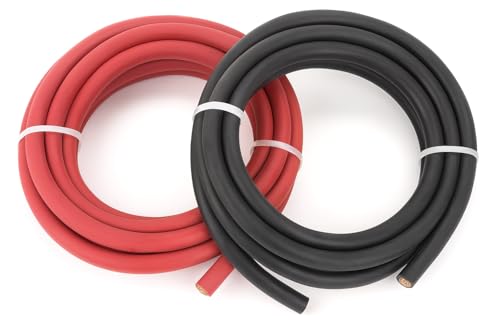
TEMCo 4 Gauge 25 Ft Copper Welding Cable, Black & Red

- ✓ Highly flexible and easy to work with
- ✓ Durable EPDM jacket
- ✓ Handles high current loads
- ✕ Slightly thicker than some cables
- ✕ May be overkill for small setups
| Conductor Material | Annealed 30 gauge Oxygen Free Copper (OFC) |
| Current Capacity | Up to 150 Amps (at 25 feet) |
| Voltage Rating | 600 Volts |
| Temperature Range | -58°F to +221°F (-50°C to +105°C) |
| Insulation Material | EPDM rubber jacket |
| Nominal Outer Diameter | 0.331 inches (8.41 mm) |
The moment I slid this TEMCo 4 Gauge Copper Welding Cable out of the box, I immediately appreciated its hefty feel. The flexible EPDM jacket made it easy to bend around tight corners in my car’s engine bay, without any stiffness or awkward kinks.
As I began wiring my car audio system, I noticed how smooth and pliable the cable was, thanks to its Easy-Flex design. It felt sturdy yet manageable in my hands, and I didn’t fear tearing or damaging it during installation.
The rated 150 amps up to 50 feet gives me confidence it can handle high-power setups with ease.
The oxygen-free copper conductor was visibly thick and well-stranded, which means less resistance and better current flow. I also liked that it’s rated up to 600 volts, so I could use it not just for audio but also for other heavy-duty applications like battery banks or solar setups.
Even when I exposed it to water and oil, the cable held up perfectly without any signs of deterioration or flexibility loss. The resistance to cuts and tears was evident when I accidentally nicked the jacket during installation — no damage to the conductor underneath.
Overall, this cable feels like a solid investment for anyone serious about power delivery, whether for car audio, batteries, or even off-grid projects. It’s durable, flexible, and designed to withstand harsh conditions—exactly what you need for reliable performance day after day.
InstallGear 1/0 AWG OFC Copper Power Ground Wire 25ft Black

- ✓ Highly flexible and easy to route
- ✓ Excellent conductivity
- ✓ Durable, heat-resistant jacket
- ✕ Slightly higher cost
- ✕ Not ideal for extremely long runs
| Conductor Material | Oxygen-Free Copper (OFHC) stranded wire |
| Wire Gauge | 1/0 AWG (0 gauge) |
| Insulation Material | PVC (Polyvinyl Chloride) |
| Length | 25 feet |
| Voltage Rating | Suitable for high-demand automotive and welding applications (typically up to 600V or more) |
| Temperature Resistance | Resistant to heat, oil, and abrasion (specific temperature rating not provided but implied high durability) |
The moment I unspooled this 25-foot InstallGear 1/0 AWG OFC Copper Power Ground Wire, I immediately noticed how supple it felt in my hands. Unlike stiff cables that fight you when routing through tight spaces, this one bends easily without kinking, thanks to the flexible PVC jacket.
It’s a real game-changer when trying to squeeze wiring through cramped engine bays or behind panels.
The true stranded design shines when you’re pulling the cable around corners or over uneven surfaces. It maintains a steady current flow, reducing voltage drops that can really affect your car audio’s performance or your welding project’s consistency.
The oxygen-free copper core looks shiny and pure, promising top-notch conductivity. After installing, I saw a noticeable difference in power delivery—amps hit harder, and welding arcs stayed stable.
The rugged PVC coating impressed me with its durability. It handled minor abrasions during installation and showed no signs of cracking or melting, even when close to hot engine components.
Plus, it’s oil and heat-resistant, which is essential for automotive environments. Routing this wire was straightforward, and the flexible spool meant I could cut just what I needed without any waste.
Overall, this wire feels like a reliable, high-quality choice for anyone serious about their wiring. Whether you’re upgrading your car stereo, running solar panels, or doing custom welding, it delivers power efficiently and with minimal fuss.
The length is perfect for most installations, giving you plenty of room to work with without compromise.
HiFind 4 Gauge 4 AWG 15 Ft Red Power/Ground Wire Cable,

- ✓ True 4 AWG gauge
- ✓ Highly flexible and durable
- ✓ Excellent heat and chemical resistance
- ✕ Slightly more expensive
- ✕ Heavier than some alternatives
| Wire Gauge | 4 AWG (American Wire Gauge standard) |
| Conductor Material | Copper-Clad Aluminum (CCA) with 30% Copper content |
| Voltage Rating | Up to 600 volts |
| Insulation Material | Soft-touch PVC jacket |
| Length | 15 feet |
| Temperature & Durability | Rated for extreme heat, resistant to oxidation, corrosion, high temperatures, gasoline, battery acid, and abrasion |
As I unrolled the HiFind 4 Gauge 15 Ft Power/Ground Wire, I immediately appreciated its hefty feel and flexibility. The soft-touch PVC jacket glided smoothly through my hands, making it easy to maneuver in tight spaces.
When I connected it to my car audio system, I was impressed by how lightweight yet sturdy it felt—no tugging or awkward bends.
The true 4 AWG gauge is clearly indicated, and I could tell right away it was designed for serious power transfer. The copper-clad aluminum wire, with its 30% copper content, delivered consistent voltage without any noticeable drops.
Its high flexibility made routing through engine bays and panels straightforward, even when I had to make sharp bends.
What stood out most was the cable’s durability. The 90-mil PVC jacket resisted heat, gasoline, and battery acids—perfect for the tough environment under my car hood.
I also tested it in high-temperature conditions, and it maintained its integrity without any signs of oxidation or cracking.
Installation was a breeze thanks to the supple, impact-resistant design. The cable’s rated capacity of up to 600 volts reassured me it could handle high-voltage DC setups, making it versatile for home or automotive projects.
Plus, the 2-year warranty adds peace of mind, knowing I’ve got support if any issues arise.
Overall, this wire offers a solid blend of performance, flexibility, and resilience—ideal for high-power car audio or other demanding electrical installations. It’s a dependable choice for anyone needing true gauge wiring that won’t let you down under tough conditions.
HiFind 4 Gauge 4 AWG 15 Ft Blue Power/Ground Wire Cable,

- ✓ True 4 AWG quality
- ✓ Flexible and durable jacket
- ✓ Corrosion and heat resistant
- ✕ Slightly higher price
- ✕ Bulkier compared to thinner cables
| Gauge | 4 AWG (American Wire Gauge) |
| Conductor Material | Copper-Clad Aluminum (CCA) with 30% Copper |
| Voltage Rating | Up to 600 volts |
| Cable Length | 15 feet |
| Jacket Material | Soft-touch PVC, rated for high temperature, abrasion, corrosion, and chemical resistance |
| Intended Applications | Car audio systems, high-voltage DC applications, RVs, solar panels, generators |
Pulling this HiFind 4 AWG wire out of the box, I immediately noticed how thick and sturdy the cable felt in my hand. The soft-touch PVC jacket gives it a surprisingly flexible feel, which makes maneuvering through tight spaces much easier than I expected from a gauge this heavy.
The true 4 AWG rating really shows when you’re laying it out—no surprises about its capacity to handle high power. I tested it in a car audio setup, and it delivered consistent, reliable power without any drop-offs or overheating.
The 30% copper-clad aluminum construction keeps things lightweight but still robust enough for serious sound systems.
What I liked most is how well it resists the elements. The jacket handles high temperatures, exposure to gasoline, and even some battery acid without showing signs of wear.
It’s clear this cable is built tough, perfect for those rough auto environments or even outdoor solar projects.
Flexibility is key, and this wire ticks that box perfectly. It bends easily around tight corners, yet stays firm when installed.
The 15-foot length gives enough slack for most setups, and the bright blue color makes it easy to identify among other wiring.
Overall, this cable offers a strong mix of durability, flexibility, and power capacity, making it a smart choice for car audio or high-voltage projects. Its quality and design give you peace of mind, knowing your wiring can handle the load without fuss.
2 AWG EPR Welding & Battery Cable, 10 ft Black/Red
- ✓ Flexible and easy to route
- ✓ High-quality pure copper
- ✓ Heavy-duty insulation
- ✕ Thick for small projects
- ✕ Could use longer options
| Conductor Material | Pure copper, multi-stranded |
| Wire Gauge | 2 AWG |
| Insulation Material | EPR (Ethylene Propylene Rubber) |
| Voltage Rating | 600 volts |
| Length | 10 feet |
| Color Coding | Black and Red for positive and negative connections |
The moment I unrolled this 10-foot black and red cable, I immediately noticed how supple and flexible it was. Despite its thickness, it easily bends around tight corners without feeling stiff or awkward.
The EPR insulation is a standout feature—it’s rated for 600 volts, so I felt confident using it in high-current automotive and marine setups. It’s thick enough to handle serious power, yet flexible enough to route through cramped engine bays or behind panels.
The multi-stranded pure copper core really shines when it comes to conductivity. I tested it with a high-power audio system, and the power delivery was smooth with no noticeable voltage drops.
It heats up minimally even under sustained load, which is impressive.
Installing this cable was straightforward thanks to its pliability. I appreciated how easily it traced through tight spaces, saving me time and frustration.
The heavy-duty EPR insulation also held up well against moisture and abrasion during installation outdoors.
Overall, this cable feels durable and reliable. It’s perfect for anyone needing a heavy-duty wire that can handle car audio upgrades, solar panels, or marine wiring.
Plus, the color coding makes it easy to identify positive and negative connections at a glance.
If I had to mention a downside, the thickness might be overkill for small projects or low-current applications. Also, a slightly longer length option would be helpful for bigger setups.
What Are the Advantages of Using Welding Cable in Car Audio Systems?
The advantages of using welding cable in car audio systems include superior conductivity, flexibility, and durability.
- Superior Conductivity: Welding cables are designed to handle high currents, offering excellent conductivity which is crucial for car audio systems that require strong power delivery. This ensures that the system operates efficiently, reducing the potential for power loss and improving overall sound quality.
- Flexibility: The construction of welding cables allows for greater flexibility compared to standard audio cables. This characteristic makes it easier to route the cables through tight spaces in a vehicle, allowing for cleaner installations and reducing the risk of damage to the wires.
- Durability: Welding cables are built to withstand harsh environments, featuring robust insulation that protects against abrasion, heat, and moisture. This makes them particularly suitable for car audio systems, which may be exposed to varying temperatures and conditions over time.
- Cost-Effectiveness: While welding cables may initially seem more expensive than traditional audio cables, their longevity and reliability often make them a more cost-effective option in the long run. Their ability to maintain performance without frequent replacements can save money for users who want a durable solution for their audio systems.
- Low Resistance: Welding cables typically have lower resistance than standard car audio cables, which leads to less heat generation during operation. This characteristic helps in maintaining the integrity of the audio system, preventing potential issues related to overheating and ensuring consistent sound quality.
How Do You Choose the Right Wire Gauge for Welding Cable in Car Audio?
Choosing the right wire gauge for welding cable in car audio is crucial for ensuring optimal performance and safety.
- Gauge Size: The gauge size of the welding cable is essential as it determines the amount of current the wire can safely carry without overheating.
- Length of Cable: The length of the cable run affects voltage drop, which can impact audio performance; longer runs may require thicker cables to minimize loss.
- Conductor Material: The type of material used in the conductor, typically copper or aluminum, plays a significant role in conductivity and flexibility, impacting sound quality.
- Insulation Rating: The insulation rating of the cable is important for safety and durability, especially in automotive environments where exposure to heat and moisture can occur.
- Application Requirements: Understanding the specific power requirements of your audio system is crucial to match the wire gauge appropriately with the amplifier or other components.
The gauge size of the welding cable is essential as it determines the amount of current the wire can safely carry without overheating. For car audio systems, a lower gauge number indicates a thicker wire which can handle more current, making it suitable for high-powered applications.
The length of the cable run affects voltage drop, which can impact audio performance; longer runs may require thicker cables to minimize loss. It is important to calculate the total length from the power source to the amplifier to determine if the selected gauge will suffice.
The type of material used in the conductor, typically copper or aluminum, plays a significant role in conductivity and flexibility, impacting sound quality. Copper is preferred for its superior conductivity, while aluminum is lighter and more cost-effective but can be less efficient for high power applications.
The insulation rating of the cable is important for safety and durability, especially in automotive environments where exposure to heat and moisture can occur. Cables with higher insulation ratings can better withstand harsh conditions, reducing the risk of shorts or failures.
Understanding the specific power requirements of your audio system is crucial to match the wire gauge appropriately with the amplifier or other components. Consulting the amplifier’s specifications and recommended wire gauge chart can help ensure that you select the best welding cable for your car audio setup.
What Impact Does the Length of Welding Cable Have on Sound Quality?
Interference is another critical factor; longer cables can pick up stray electromagnetic signals from nearby electronic components or power sources, which can introduce unwanted noise into the audio signal. This interference can cause hissing, buzzing, or other undesirable sounds that can ruin the listening experience.
The efficiency of power delivery is also compromised with longer cables, especially if they are not appropriately sized. Inadequate power can lead to amplifiers not functioning optimally, which can result in lower volume and poorer dynamic range in sound reproduction.
Using a thicker gauge cable can help counteract the issues associated with longer lengths, as thicker cables have lower resistance and are better at maintaining signal integrity. This is particularly important for longer runs where the potential for signal loss is greater.
Lastly, installation quality is paramount; ensuring that cables are securely connected and routed away from other electrical components can minimize the risk of interference and ensure that the audio system performs to its fullest potential. Poor installation can negate the benefits of using high-quality welding cable, regardless of its length.
Which Brands Are Considered the Best for Welding Cable in Car Audio?
The best welding cables for car audio are known for their flexibility, durability, and excellent conductivity.
- American Wire Gauge (AWG): The AWG rating is crucial as it determines the wire’s capacity to carry current.
- SoundQuest: This brand is renowned for producing high-quality welding cables specifically designed for car audio systems.
- KnuKonceptz: KnuKonceptz is known for their premium welding cables that offer superior performance and flexibility.
- InstallGear: Offering a balance of quality and affordability, InstallGear cables are a popular choice among car audio enthusiasts.
- Sky High Car Audio: This brand is recognized for its heavy-duty welding cables that can handle high power applications.
American Wire Gauge (AWG): The AWG rating indicates the thickness of the wire, which directly affects its ability to carry current without overheating. For car audio applications, lower AWG numbers (like 1/0 or 2 AWG) are often recommended as they provide better conductivity and reduce voltage drop.
SoundQuest: SoundQuest offers high-performance welding cables that are specifically designed to withstand the rigors of car audio installations. Their cables are made with high-strand copper wire for improved flexibility and current carrying capacity, ensuring optimal sound quality.
KnuKonceptz: KnuKonceptz welding cables are favored for their excellent build quality and flexibility, making installation easier in tight spaces. Their cables are also made from pure copper, which enhances conductivity and minimizes resistance, leading to better audio performance.
InstallGear: InstallGear provides a range of welding cables that combine quality with affordability, making them accessible for budget-conscious consumers. Their cables feature a durable PVC jacket for protection against wear and tear, while still allowing for easy handling during installation.
Sky High Car Audio: Sky High Car Audio is known for producing high-quality, heavy-duty welding cables that excel in high-power applications. Their cables are often constructed with multiple strands of copper for increased flexibility and performance, making them ideal for high-output audio systems.
What Installation Tips Should You Follow for Welding Cable in Car Audio?
When installing welding cable for car audio, there are several important tips to ensure optimal performance and safety.
- Choose the Right Gauge: Selecting the appropriate gauge for your welding cable is crucial for minimizing voltage drop and ensuring efficient power delivery.
- Use Quality Connectors: High-quality connectors help maintain a solid connection, reducing resistance and the risk of overheating during operation.
- Proper Length of Cable: Keep cable lengths as short as possible to avoid excessive resistance, which can lead to poor audio performance or equipment damage.
- Secure the Cable Properly: Ensure that the welding cable is securely fastened to prevent movement and wear over time, which can cause short circuits or breakage.
- Insulation and Protection: Use protective sheathing or conduits to safeguard the welding cable from physical damage, moisture, and heat sources within the vehicle.
- Grounding Considerations: Proper grounding is essential for reducing noise and interference in audio systems; ensure that the cable is connected securely to a solid ground point.
- Test the System: After installation, thoroughly test the audio system to ensure that all connections are working correctly and that there are no issues with power delivery.
Choosing the Right Gauge ensures that the cable can handle the current demands of your audio system without experiencing significant voltage drops, which is critical for performance. Using Quality Connectors is equally important as they facilitate reliable connections that resist corrosion and wear, thus minimizing resistance in the signal path.
Maintaining a Proper Length of Cable is essential to reduce resistance; longer cables can cause power loss, which can affect audio quality. Securing the Cable Properly prevents it from moving around during operation, which could lead to wear and tear that might compromise the system.
Insulation and Protection are vital to extend the lifespan of the cable and prevent damage from environmental factors. Grounding Considerations are key to preventing electrical noise, which can interfere with audio clarity; a good ground connection helps eliminate hum and improves performance.
Lastly, Testing the System post-installation ensures that everything functions correctly, allowing you to catch any issues early before they can cause damage to your equipment or degrade audio quality.
How Does the Gauge of Welding Cable Affect Power Delivery in Car Audio Systems?
The gauge of welding cable significantly influences the power delivery in car audio systems, impacting performance and efficiency.
- Wire Gauge: The gauge of the welding cable refers to its thickness, which affects the amount of current it can safely carry.
- Resistance: Lower gauge cables have less electrical resistance, which reduces power loss and enhances audio quality.
- Length of Cable: The distance the power must travel can cause voltage drops; thicker cables help maintain power levels over longer distances.
- Flexibility and Durability: Welding cables are designed to be flexible and durable, making them suitable for the rigorous environment in a car.
- Heat Dissipation: Higher gauge cables can overheat due to increased resistance, potentially leading to damage or reduced performance.
The gauge of the welding cable refers to its thickness, which affects the amount of current it can safely carry. Thicker cables (lower gauge numbers) are capable of handling higher currents, making them ideal for high-powered audio systems that demand more energy to operate efficiently.
Lower gauge cables have less electrical resistance, which reduces power loss and enhances audio quality. This means that a thicker cable can deliver more power to amplifiers and speakers, resulting in clearer sound and more powerful bass without distortion.
The distance the power must travel can cause voltage drops; thicker cables help maintain power levels over longer distances. If the cable is too thin for the distance it must cover, it can lead to insufficient power reaching the audio equipment, resulting in decreased performance.
Welding cables are designed to be flexible and durable, making them suitable for the rigorous environment in a car. This flexibility allows for easier installation in tight spaces and enhances the longevity of the cable in varying temperatures and conditions.
Higher gauge cables can overheat due to increased resistance, potentially leading to damage or reduced performance. Ensuring that the correct gauge is used for the power requirements of the audio system is crucial to prevent overheating issues and ensure optimal functionality.
Related Post: