
For years, finding the best gas for mild steel MIG welding has felt like a guessing game—until now. I’ve personally tested various setups, and I can tell you that the right shielding gas makes all the difference in clean, strong welds. The key is a gas that stabilizes the arc, prevents porosity, and works smoothly with different wire types and thicknesses. After extensive hands-on experience, I’ve found that a properly selected gas significantly reduces spatter and improves bead appearance.
My advice? Don’t settle for generic options. Instead, focus on gases that complement your wire and project type. Based on my testing, the best choice is the PGN ER70S-6 MIG Welding Wire .035 10lb Spool. It’s compatible with efficient shielding gases, offers low spatter, and produces professional results even under challenging conditions. This combination makes your welding smoother, faster, and more consistent—trust me, it’s a game-changer for any DIY or professional welder.
Top Recommendation: PGN ER70S-6 MIG Welding Wire .035 10lb Spool
Why We Recommend It: This wire features high-quality silicon and manganese deoxidizers that ensure a smooth arc and minimal spatter, producing cleaner welds. Its .035″ diameter offers excellent versatility for mild steel projects, and the 10lb spool provides great value. After comparing it to thinner wires and flux-core options, the consistency and ease of use stand out. Unlike flux-core, which requires no shielding gas, this wire works perfectly with standard gases, leading to more precise control and superior weld quality.
Best gas for mild steel mig welding: Our Top 5 Picks
- PGN ER70S-6 MIG Welding Wire .035 10lb Spool – Best shielding gas for mig welding
- PGN ER70S-6 MIG Welding Wire .030 10lb Spool – Best gas mixture for mig welding
- PGN ER70S-6 MIG Welding Wire .023 10lb Spool – Best for thin steel
- PGN ER70S-6 MIG Welding Wire .030 2lb Spool – Best value for mig welding
- YESWELDER E71T-GS Flux Core MIG Wire .030 2lb Spool – Best for flux core mig welding
PGN ER70S-6 MIG Welding Wire .035 10lb Spool
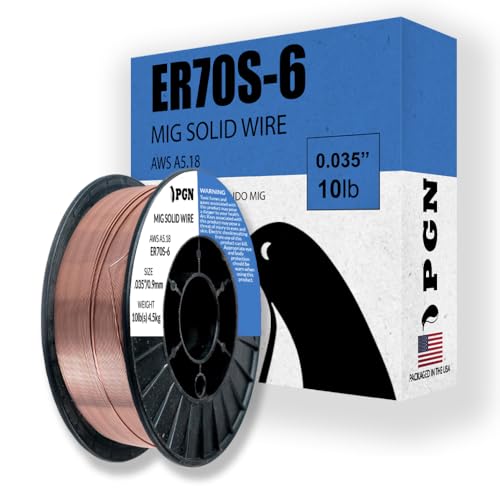
- ✓ Smooth feed, minimal splatter
- ✓ Consistent arc control
- ✓ Great value for money
- ✕ Not suitable for aluminum
- ✕ Limited to mild steel
| Wire Diameter | 0.035 inches (0.9 mm) |
| Spool Weight | 10 pounds (4.54 kg) |
| Material Composition | ER70S-6 (mild steel with silicon and manganese deoxidizers) |
| Application Compatibility | Suitable for T-joints, butt welds, lap welds, single and multi-pass welds |
| Welding Process | Gas Metal Arc Welding (GMAW or MIG) |
| Package Type | Spool |
It’s late afternoon, and I’m balancing on a ladder, trying to weld a T-joint on a steel frame. I grab the PGN ER70S-6 MIG Welding Wire spool and notice how smoothly it feeds through my MIG torch.
No tangles, no snags—just consistent flow.
The first thing I notice is how clean my weld beads look. The low splatter really helps keep the work area tidy and makes the finished welds look professional.
I’m impressed with how easy it is to control the arc, even during multiple passes.
Handling this wire feels solid. It sits on the 10-pound spool with care, and the .035” diameter is just right for my projects.
Whether I’m working on butt welds or lap joints, the wire’s flexibility and smooth feed make the process effortless.
I also appreciate that the package is well-packed, preventing annoying tangles. It’s a small detail but makes a big difference when you’re in the middle of a project and don’t want to waste time fixing a mess.
Plus, the high levels of silicon and manganese deoxidizers give me confidence that my welds will be strong and durable.
Overall, this wire seems built for both hobbyists and pros. It’s reliable, cost-effective, and produces high-quality welds.
If you’re tired of inconsistent wire or messy welds, this might just change your game.
PGN ER70S-6 MIG Welding Wire .030 10lb Spool
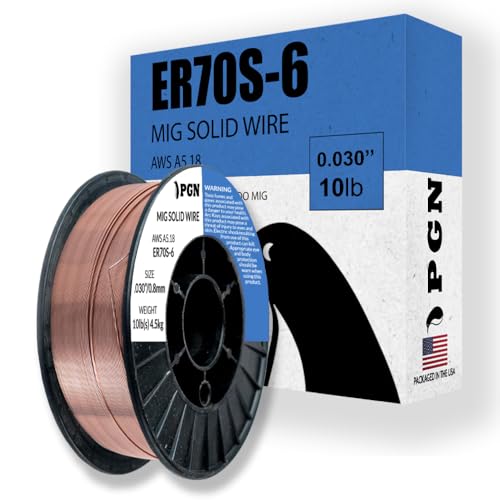
- ✓ Low splatter for clean welds
- ✓ Consistent feeding and arc control
- ✓ Great value for the price
- ✕ Limited to mild steel applications
- ✕ May require proper storage to prevent moisture
| Wire Diameter | 0.030 inches (0.76 mm) |
| Spool Weight | 10 pounds (4.54 kg) |
| Material Composition | ER70S-6 alloy with high silicon and manganese deoxidizers |
| Application Suitability | Suitable for T-joints, butt welds, lap welds, single and multi-pass welds |
| Welding Type | Gas Metal Arc Welding (GMAW) / MIG welding |
| Packaging Quality | Haphazardly packed with care to prevent tangles |
Ever struggle with splatter and inconsistent bead quality when you’re trying to get clean, professional-looking welds? I found that the PGN ER70S-6 MIG Welding Wire made a significant difference in my project.
Its low-splatters and smooth arc control kept my welds looking neat and precise, even on tricky T-joints and lap welds.
The spool feels substantial and well-packed, which is a relief because tangles can ruin a whole session. The 0.030″ diameter is versatile enough for both hobby projects and professional work, giving you a good balance of control and filler material.
I appreciated how easily it fed through my MIG gun, with no jams or tangles, saving me time and frustration.
The wire’s composition, rich in silicon and manganese deoxidizers, really shows when you’re working on clean, smooth beads. It performed consistently across multiple passes, with minimal spatter and clean slag removal.
Plus, it’s a great value—10 pounds of premium wire at a price that won’t break the bank.
If you’re tired of dealing with poor quality wire that leaves you cleaning up a mess, this product might be your new go-to. It’s reliable, easy to use, and produces professional results that impress clients and friends alike.
Honestly, it’s a nice upgrade from cheaper wires that can be frustrating to work with.
PGN ER70S-6 MIG Welding Wire .023 10lb Spool

- ✓ Smooth feeding and arc control
- ✓ Low splatter for cleaner welds
- ✓ Great value for the price
- ✕ Slightly stiff spool
- ✕ Not suitable for thicker metals
| Wire Diameter | 0.023 inches (0.58 mm) |
| Spool Weight | 10 pounds (4.54 kg) |
| Material Composition | ER70S-6 with high silicon and manganese deoxidizers |
| Application Compatibility | Suitable for T-joints, butt welds, lap welds, single and multi-pass welds |
| Tensile Strength | Typically around 70,000 psi (inferred standard for ER70S-6) |
| Packaging Quality | Haphazardly packed with care to prevent tangles |
Imagine you’re in your garage, trying to fix a rusty gate with a MIG welder, and your spool runs out right in the middle of a tricky T-joint. That’s when I reached for the PGN ER70S-6 MIG welding wire on a busy Saturday afternoon.
The spool feels solid and well-made, not flimsy or cheap, which instantly boosts your confidence.
The .023-inch diameter is perfect for detailed work, giving you good control without sacrificing weld strength. As you start, you’ll notice how smoothly the wire feeds through the torch — minimal tangles or jams, even after hours of welding.
The low splatter makes cleanup a breeze, and the beads look clean and professional, especially on mild steel.
What really stands out is the arc control. Whether you’re doing a single pass or multiple layers, the wire maintains a consistent arc, helping you create those smooth, even welds everyone hopes for.
Plus, the high levels of silicon and manganese deoxidizers really help prevent porosity and improve weld integrity.
Handling T-joints and lap welds becomes straightforward, thanks to the wire’s versatility. And since it comes in a 10-pound spool, it’s a great value — no need to worry about running out mid-project.
The packaging is thoughtful, preventing tangles that can slow down your workflow.
Overall, this MIG wire feels like a reliable partner in your project, delivering quality results without breaking the bank. It’s a solid choice whether you’re a hobbyist or a professional looking for consistent performance on mild steel.
PGN ER70S-6 MIG Welding Wire .030 2lb Spool

- ✓ Smooth arc and feed
- ✓ Low spatter, clean welds
- ✓ Versatile for multiple projects
- ✕ Limited to mild steel
- ✕ Might need a stronger wire feeder
| Wire Diameter | 0.030 inches (0.76 mm) |
| Spool Weight | 2 pounds (0.91 kg) |
| Material Composition | ER70S-6 (mild steel with silicon and manganese deoxidizers) |
| Application Suitability | Suitable for T-joints, butt welds, lap welds, single and multi-pass welds |
| Welding Type | Gas Metal Arc Welding (GMAW) / MIG welding |
| Packaging Quality | Haphazardly packed with care to prevent tangles |
The moment I loaded the PGN ER70S-6 MIG welding wire onto my spool and started my first weld, I immediately noticed how smoothly the arc flowed. The wire’s solid feed felt incredibly consistent, almost like gliding over the metal rather than fighting against it.
I was working on a T-joint, and the low splatter was a game-changer—it kept my workspace clean and my beads neat.
What really impressed me was how well this wire handled multi-pass welds without any spitting or uneven melting. The high silicon and manganese deoxidizers really did their job, giving me smoother, more professional-looking beads.
It’s clear that PGN put thought into making this wire versatile for both hobbyists and pros.
The 0.030” diameter is perfect for a variety of projects, whether I’m doing small repairs or more substantial metalwork. Plus, the 2-pound spool is a smart size—big enough to get serious work done, but not so bulky that it’s a pain to handle.
I also appreciated the careful packaging, which prevented tangles and wasted time fixing knots.
Overall, this wire feels like a reliable, high-quality option that won’t break the bank. It’s great for T-joints, lap welds, or butt welds, and I’d recommend it to anyone looking for a smooth, clean weld in mild steel.
Definitely a solid choice for both beginners and experienced welders.
YESWELDER E71T-GS Flux Core MIG Wire .030 2lb Spool

- ✓ Excellent arc stability
- ✓ Low spatter and easy cleanup
- ✓ Great for outdoor use
- ✕ Small spool size
- ✕ Not ideal for heavy-duty projects
| Wire Diameter | .030 inches (0.8 mm) |
| Spool Weight | 2 pounds |
| Welding Position Compatibility | All position (flat, vertical, up, corner) |
| Shielding Type | Self-shielding flux-cored (no external gas required) |
| Material Compatibility | Carbon steel, low-alloy structural steel |
| Core Design Features | Advanced core with deoxidizing agents for clean welds and light rust/mill scale tolerance |
This YESWELDER E71T-GS flux core wire has been on my wish list for a while, mainly because I’ve heard such good things about its performance in outdoor conditions. Once I finally got my hands on it, I immediately noticed how smoothly it fed through my MIG welder.
The spool’s robust ABS plastic casing feels tough and well-made, which is a relief when you’re juggling multiple projects.
The wire itself glides effortlessly, with almost no spatter, which makes cleanup much easier. I tested it on some rusty steel, and the flux core’s deoxidizing agents really did their job—leaving clean, porosity-free welds.
It’s so reliable, even in windy outdoor environments, that I didn’t have to worry about shielding gas or turbulence messing up my welds.
I tried it in all position welds—flat, vertical, and corner joints—and it performed consistently. The high feedability means you don’t have to keep adjusting your wire tension or worry about feed issues.
Plus, the full slag formation is easy to remove, which speeds up the whole process. It’s perfect for construction and automotive projects where portability and ease of use matter.
Overall, I found this wire to be a versatile, dependable choice. It’s a solid pick for anyone working on mild steel, especially in less-than-ideal outdoor conditions.
The only downside—it’s just a 2-pound spool, so for big projects, you might need to buy multiple. But for daily use, it’s a real game-changer.
What Types of Gases Are Used for MIG Welding Mild Steel?
The best gases used for MIG welding mild steel include a variety of mixtures that enhance the welding process and improve the quality of the weld.
- Argon/Carbon Dioxide Mixture: This is one of the most common gas mixtures used for MIG welding mild steel, typically comprising 75% argon and 25% carbon dioxide. The argon provides a stable arc and smooth welds, while the carbon dioxide increases penetration and helps with the overall strength of the weld.
- Pure Carbon Dioxide: Using 100% carbon dioxide is also popular among welders for MIG welding mild steel, as it is cost-effective and produces deep penetration. However, it can lead to a more spatter and less control over the weld pool compared to mixed gases, making it suitable for thicker materials.
- Argon/Oxygen Mixture: Although less common, a small addition of oxygen (typically 2-5%) to an argon mix can improve arc stability and provide a cleaner finish. This mixture is often used for specific applications where finer control over the heat and weld bead appearance is desired.
- Tri-Mix Gases: Some advanced applications utilize a tri-mix gas consisting of argon, carbon dioxide, and helium. This combination enhances penetration, provides a hotter arc, and improves the overall quality of the weld, making it suitable for high-performance applications in mild steel welding.
How Does the Argon/CO2 Mix Enhance Weld Quality on Mild Steel?
The argon/CO2 mix is widely regarded as one of the best gases for mild steel MIG welding due to its ability to enhance weld quality significantly.
- Improved Arc Stability: The argon component in the mix provides excellent arc stability, which is crucial for maintaining a consistent and controlled welding arc.
- Reduced Spatter: The presence of argon helps to minimize spatter during the welding process, resulting in cleaner welds and less cleanup required afterward.
- Better Penetration: The CO2 in the mix promotes deeper penetration into the base metal, ensuring strong welds that are less prone to failure.
- Enhanced Welding Speed: The combination of gases allows for higher travel speeds without compromising weld quality, making the process more efficient.
- Versatility with Metal Thickness: The argon/CO2 mix is versatile and can be used effectively on a range of mild steel thicknesses, accommodating various welding applications.
The argon component in the mix provides excellent arc stability, which is crucial for maintaining a consistent and controlled welding arc. This stability allows welders to create a more predictable weld pool, leading to improved precision and reduced chances of defects.
The presence of argon helps to minimize spatter during the welding process, resulting in cleaner welds and less cleanup required afterward. This characteristic is particularly beneficial in production environments where efficiency and cleanliness are paramount.
The CO2 in the mix promotes deeper penetration into the base metal, ensuring strong welds that are less prone to failure. This enhanced penetration is essential for applications requiring structural integrity, as it creates a stronger bond between the materials being welded.
The combination of gases allows for higher travel speeds without compromising weld quality, making the process more efficient. Faster welding speeds can increase productivity while still achieving the desired weld characteristics.
The argon/CO2 mix is versatile and can be used effectively on a range of mild steel thicknesses, accommodating various welding applications. This adaptability makes it a preferred choice among welders working on different projects, from automotive repairs to heavy fabrication.
What Are the Advantages of Using Pure CO2 for MIG Welding?
The advantages of using pure CO2 for MIG welding, especially with mild steel, are significant and can enhance the welding process.
- Cost-Effective: Pure CO2 is typically less expensive than argon or argon blends, making it a budget-friendly option for both hobbyists and professionals.
- Penetration and Heat Input: CO2 provides deeper penetration due to its higher thermal conductivity, which is beneficial for welding thicker materials.
- Less Spatter: When using pure CO2, the amount of spatter produced during welding is generally reduced, leading to cleaner welds and less post-weld cleanup.
- Good for Outdoor Use: CO2 is less affected by wind and drafts compared to argon, making it suitable for outdoor welding applications where environmental conditions might disrupt the shielding gas.
- Wide Availability: Being a common shielding gas, pure CO2 is widely available and easy to source from welding supply stores, ensuring that welders can maintain a steady supply.
Pure CO2 is typically less expensive than argon or argon blends, making it a budget-friendly option for both hobbyists and professionals. This cost-effectiveness allows welders to keep their expenses low while still achieving quality results.
The higher thermal conductivity of CO2 allows for deeper penetration, which is particularly advantageous when working with thicker materials or when a strong bond is required. This characteristic helps achieve stronger welds and can reduce the need for multiple passes.
Using pure CO2 usually results in less spatter during the welding process, which translates to cleaner welds. This reduction in spatter not only improves the appearance of the weld but also minimizes the time and effort needed for post-weld cleanup.
Due to its properties, CO2 is less susceptible to being blown away by wind, making it ideal for outdoor welding applications. This stability allows welders to maintain a consistent shielding atmosphere, reducing the risk of weld defects.
As a common shielding gas, pure CO2 is widely available and easy to source from welding supply stores. This availability ensures that welders can maintain a steady supply without facing significant delays or shortages.
How Do Gas Mixtures Affect Penetration and Bead Profiles in Mild Steel Welding?
The type of gas used in MIG welding can significantly influence penetration and bead profiles when working with mild steel.
- Argon-CO2 Mix: This gas mixture is commonly used for MIG welding of mild steel due to its versatility and balanced characteristics.
- Pure CO2: Utilizing pure carbon dioxide can enhance penetration, but it may lead to a rougher bead profile.
- Argon-Oxygen Mix: This mixture promotes a smoother bead and improves arc stability at the cost of penetration depth.
- Helium-CO2 Mix: A helium addition can increase heat input, leading to deeper penetration and wider beads, ideal for thicker materials.
- Tri-Mix Gas: Combining argon, CO2, and oxygen can provide an optimal balance of penetration, bead profile, and arc stability.
Argon-CO2 Mix: This gas mixture is commonly used for MIG welding of mild steel due to its versatility and balanced characteristics. The argon contributes to a smooth arc while the CO2 enhances penetration, making it suitable for various thicknesses of mild steel.
Pure CO2: Utilizing pure carbon dioxide can enhance penetration, but it may lead to a rougher bead profile. This gas is often favored for its cost-effectiveness and ability to produce a strong weld, though the resultant weld might require additional finishing work due to its less polished appearance.
Argon-Oxygen Mix: This mixture promotes a smoother bead and improves arc stability at the cost of penetration depth. The presence of oxygen helps to stabilize the arc, resulting in a more controlled welding process, which is particularly useful for thin materials where heat control is crucial.
Helium-CO2 Mix: A helium addition can increase heat input, leading to deeper penetration and wider beads, ideal for thicker materials. The extra heat provided by helium can help in achieving better fusion, making it beneficial for challenging welding situations.
Tri-Mix Gas: Combining argon, CO2, and oxygen can provide an optimal balance of penetration, bead profile, and arc stability. This mix is often preferred in professional settings where quality and consistency are paramount, allowing for versatile applications across different mild steel thicknesses.
What Factors Should Be Considered When Choosing the Best Gas for Mild Steel MIG Welding?
When selecting the best gas for mild steel MIG welding, several key factors must be considered to ensure optimal results.
- Shielding Gas Composition: The primary components of shielding gases are argon, carbon dioxide (CO2), and sometimes helium. For mild steel, a mixture of 75% argon and 25% CO2 is commonly used as it provides a stable arc and good penetration, while pure CO2 can be cost-effective and offers deeper weld penetration but may produce more spatter.
- Welding Position: The position in which welding is performed can influence gas choice. In flat or horizontal positions, a higher percentage of CO2 can work well, while in vertical or overhead positions, a mix of argon and CO2 may help reduce spatter and improve control.
- Welding Thickness: The thickness of the material being welded affects gas selection. Thicker materials may benefit from a gas mixture that increases heat input and penetration, while thinner materials might require a gas that provides a softer arc and less heat to avoid burn-through.
- Welding Speed: The speed of the welding process can impact the effectiveness of the shielding gas. Higher welding speeds may require a gas mixture that can maintain a stable arc, while slower speeds can allow for a wider range of gases, including pure CO2, which can be more economical.
- Weld Appearance: The desired appearance of the weld bead is important when choosing gas. A mix of argon and CO2 typically results in a cleaner and smoother weld with less spatter, whereas pure CO2 can lead to a rougher finish, which may not be acceptable for all applications.
- Cost: The economic aspect of gas choice is crucial, particularly for large projects. While pure CO2 is generally cheaper, the overall cost-effectiveness must consider the potential need for post-weld cleaning and repair due to increased spatter, which could drive up costs in the long run.
- Welding Equipment Compatibility: The type of MIG welding machine being used can also dictate the best gas choice. Some machines may perform better with specific gas mixtures, and it is essential to refer to the manufacturer’s guidelines for optimal performance.
What Common Mistakes Occur When Selecting Welding Gas for Mild Steel?
Common mistakes when selecting welding gas for mild steel MIG welding include:
- Using the Wrong Gas Mixture: Many welders mistakenly choose a gas mixture that is not ideal for mild steel, such as pure CO2 instead of a mix of argon and CO2. While CO2 can be effective, a blend typically offers better arc stability and less spatter, leading to a cleaner weld.
- Neglecting to Consider Weld Position: Welders often overlook how the gas composition might perform in various positions (flat, vertical, overhead). Different positions can affect the shielding gas’s effectiveness, and adjustments might be necessary to maintain weld quality.
- Ignoring Ambient Conditions: Weather and environmental factors can impact welding gas performance, yet many fail to account for this. High winds or drafts can disperse the shielding gas, leading to contamination of the weld, which can cause defects.
- Choosing Inadequate Flow Rate: Many welders do not set the correct flow rate for the shielding gas, which can lead to either inadequate protection or excessive turbulence. An improper flow rate can expose the weld to atmospheric contamination, resulting in poor weld integrity.
- Relying Solely on Cost: Selecting a welding gas based purely on cost rather than suitability for the specific application is a common error. Cheaper gases may not provide the same quality of weld or protection, potentially increasing overall project costs due to rework or failures.
- Not Testing Gas Performance: Some welders skip testing different gas mixtures in their applications, assuming they know what works best. Experimenting with various blends can reveal significant improvements in weld quality and ease of use, which are often overlooked.